Order Preparation Workflow
The order preparation workflow represents the critical production phase of pizza delivery operations. This systematic process transforms customer orders into finished products ready for delivery, requiring precise coordination of personnel, equipment, and timing. Understanding this workflow provides insight into how restaurants maintain quality, efficiency, and consistency in high-volume food service environments.
Order Intake Process
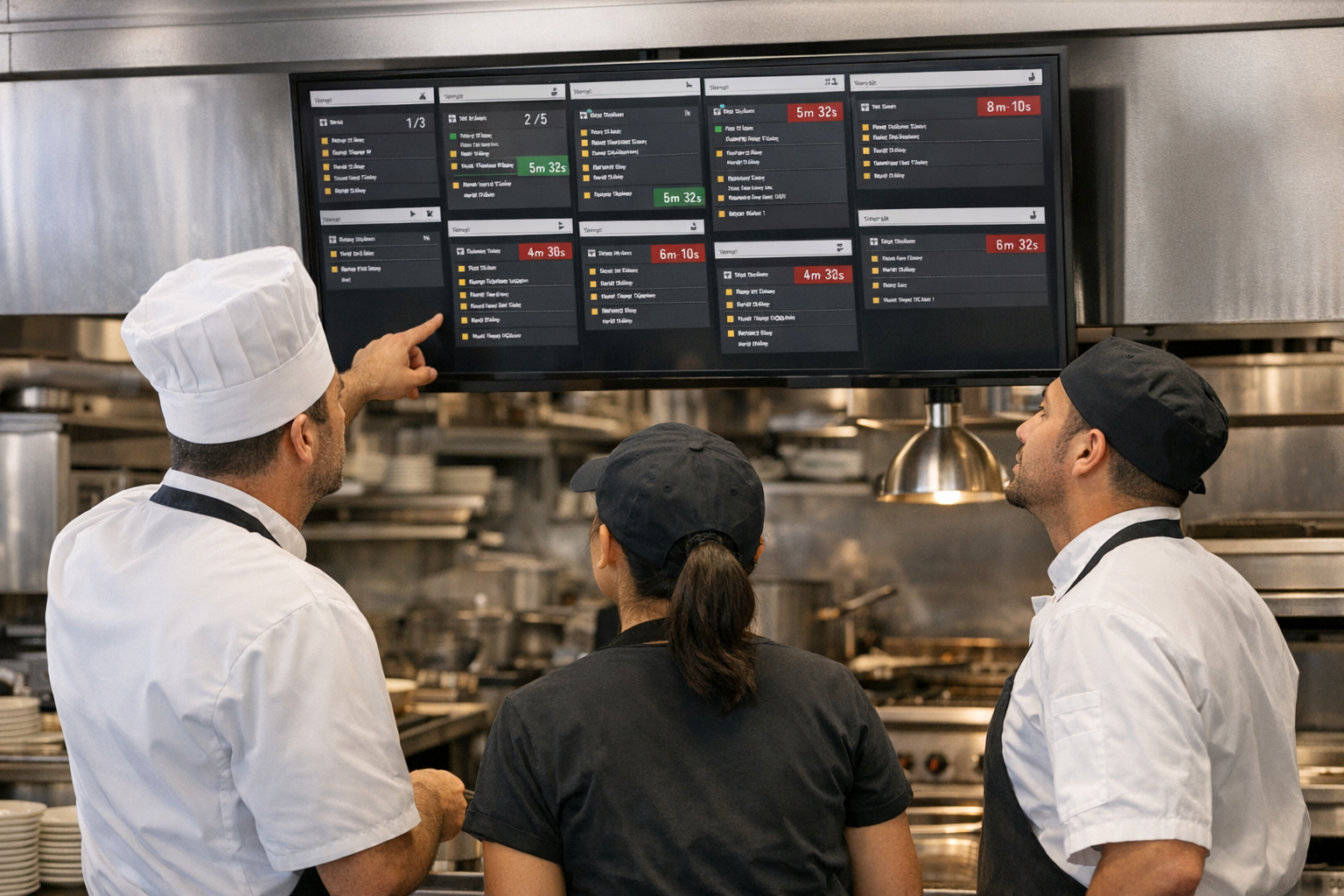
The preparation workflow begins when an order enters the restaurant's system through one of multiple channels: telephone orders, mobile applications, or online ordering platforms. Modern point-of-sale (POS) systems integrate these various order sources into a unified interface, displaying incoming orders to kitchen staff in real-time with detailed specifications including pizza type, size, crust preferences, and special instructions.
Order intake systems perform several critical functions: inventory verification to ensure all required ingredients are available, time estimation calculations to provide customers with accurate delivery projections, and order sequencing to optimize kitchen workflow efficiency. Advanced systems may also integrate with customer relationship management (CRM) databases to identify repeat customers and their preferences.
Dough Preparation and Shaping
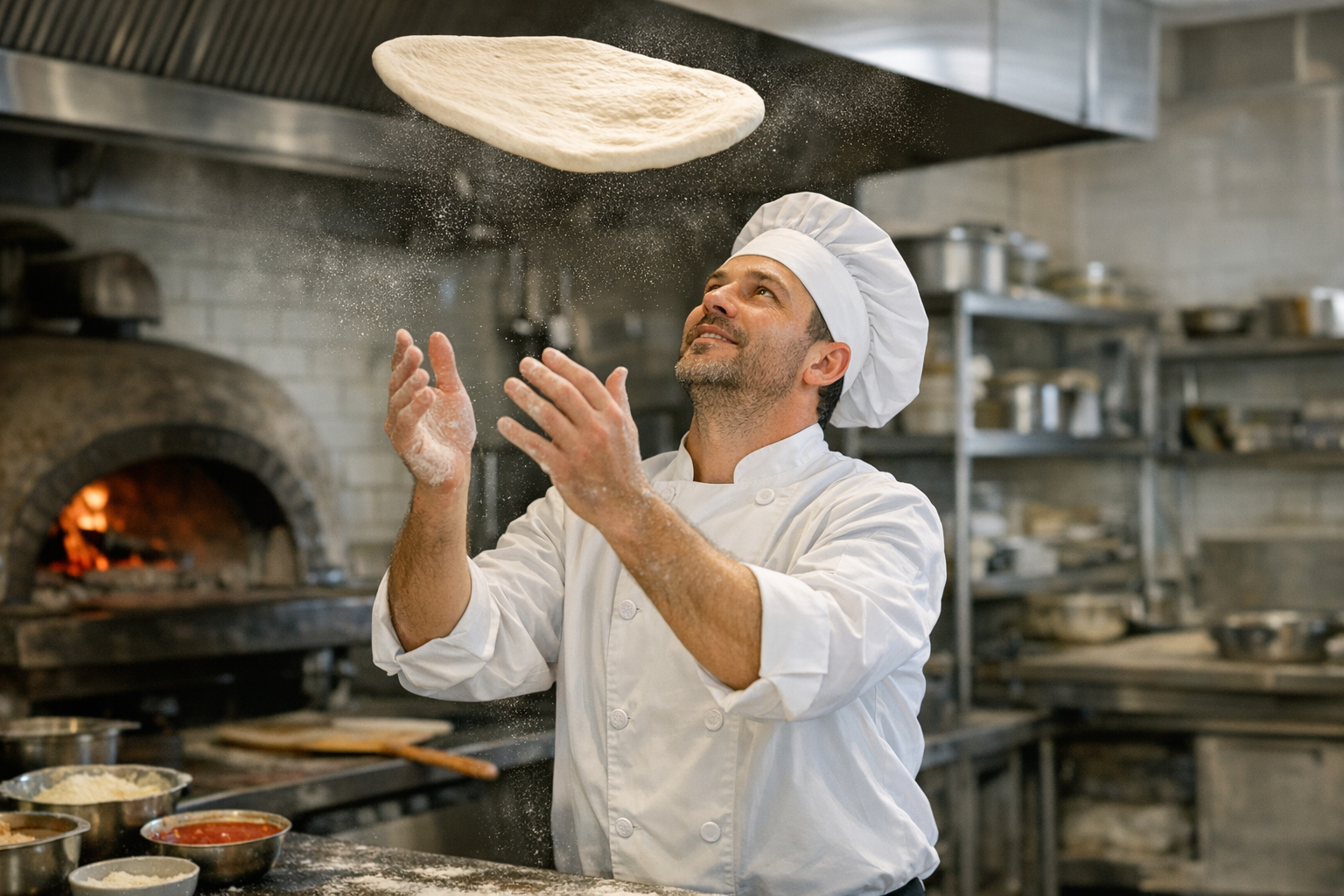
Dough preparation forms the foundation of pizza production and typically begins well before orders are received. Commercial kitchens prepare dough in batches using standardized recipes that specify precise measurements of flour, water, yeast, salt, and other ingredients. The dough undergoes fermentation periods that develop flavor and texture, requiring careful timing and temperature control.
When an order is received, staff retrieve appropriately sized dough portions and begin the shaping process. This involves stretching and tossing the dough to achieve the desired thickness and diameter while maintaining uniform thickness across the entire surface. Skilled pizza makers develop techniques to stretch dough evenly without tearing, ensuring consistent cooking and structural integrity during baking.
Ingredient Assembly
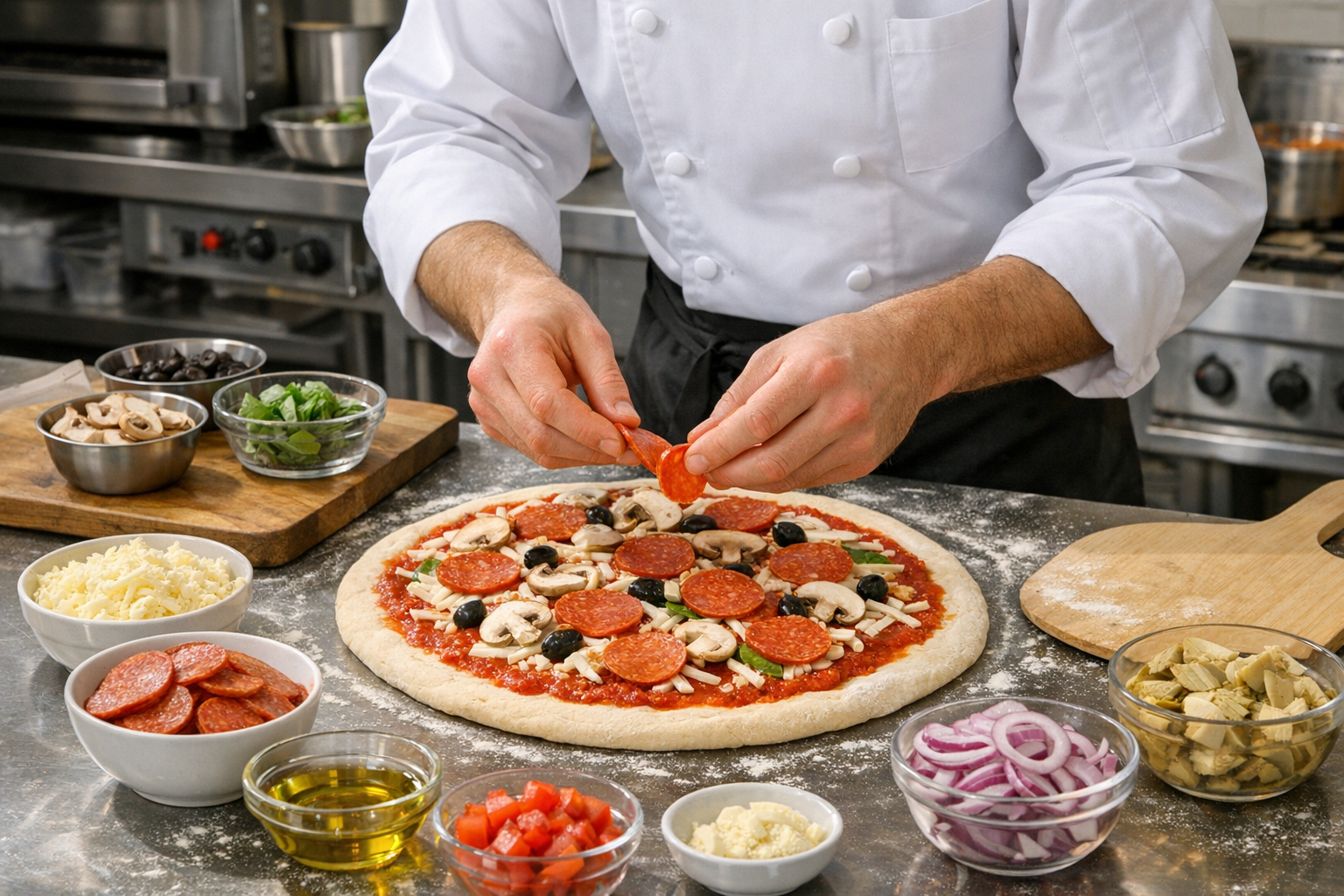
Once dough is shaped, the assembly process begins with the application of sauce. Most commercial operations use standardized sauce recipes applied in specific quantities to ensure consistency. Sauce application techniques vary by style but generally aim for even coverage while leaving the outer crust edge clean for proper crust formation during baking.
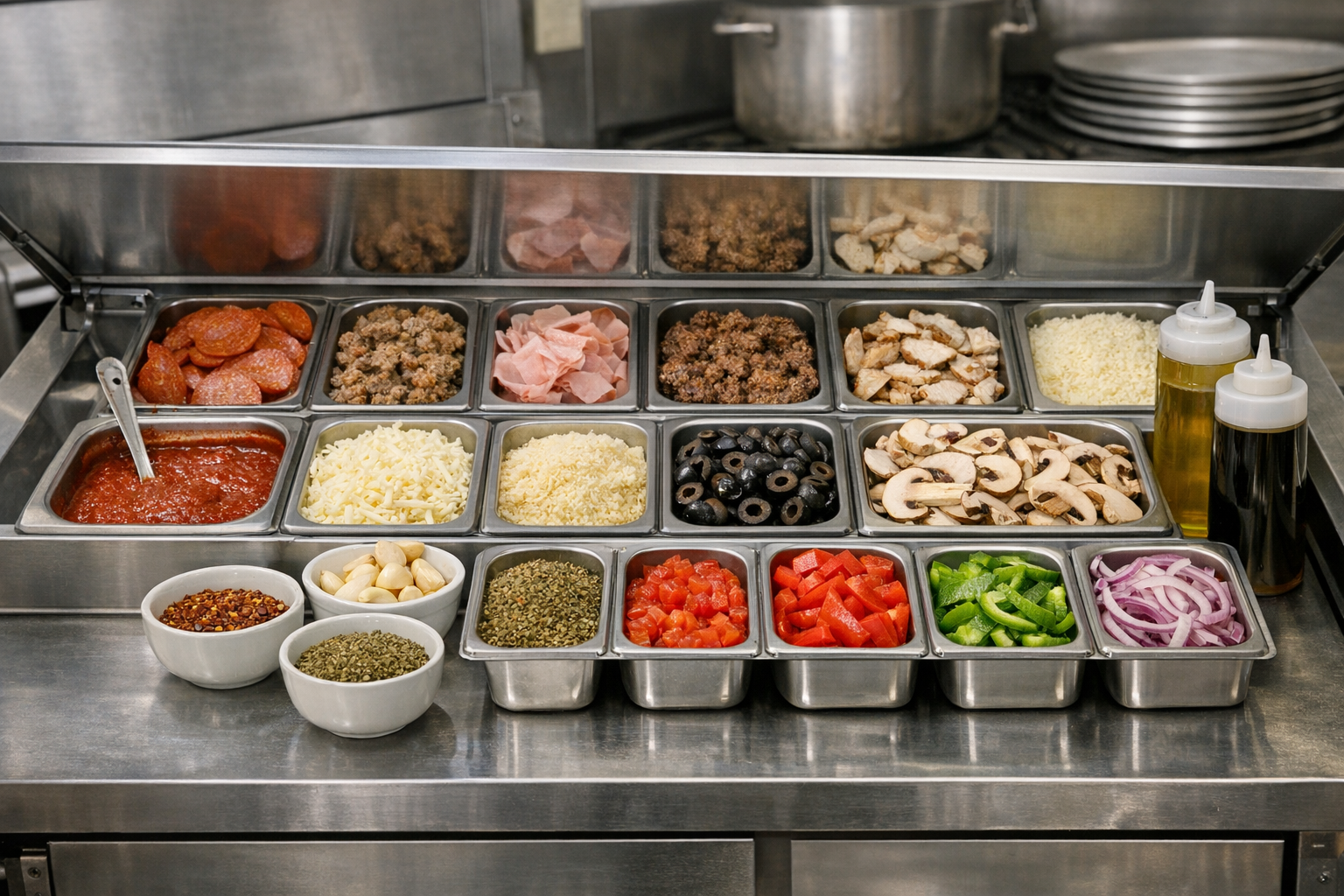
Cheese application follows sauce placement, with careful attention to distribution and quantity. Different pizza styles require specific cheese types and application methods. After cheese, additional toppings are applied according to customer specifications. Proper topping distribution affects both cooking performance and final product quality, making this a critical step in the preparation process.
Cooking Process
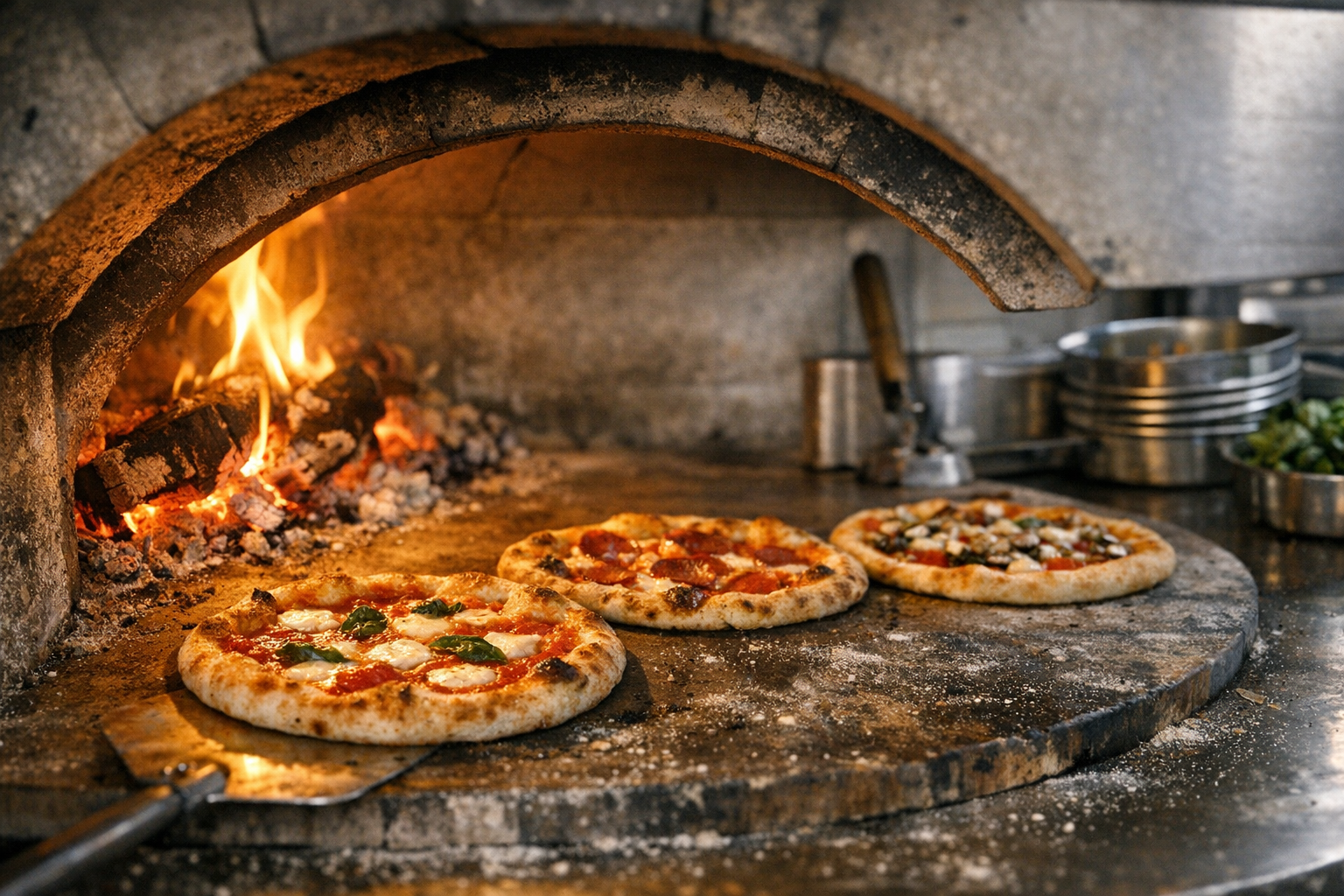
The cooking phase represents the transformation of assembled ingredients into finished pizza through controlled application of heat. Commercial pizza ovens operate at significantly higher temperatures than home ovens, typically reaching 500-700°F (260-370°C) or higher. These high temperatures enable rapid cooking that creates characteristic pizza textures while preserving ingredient quality.
Cooking times vary based on oven type, pizza thickness, and ingredient load, but typically range from 90 seconds to 12 minutes. During cooking, several chemical processes occur: dough rises and becomes crispy, cheese melts and browns, and toppings cook through to safe temperatures. Experienced kitchen staff monitor cooking progress through visual indicators including crust color, cheese bubbling, and aroma development.
Quality Verification
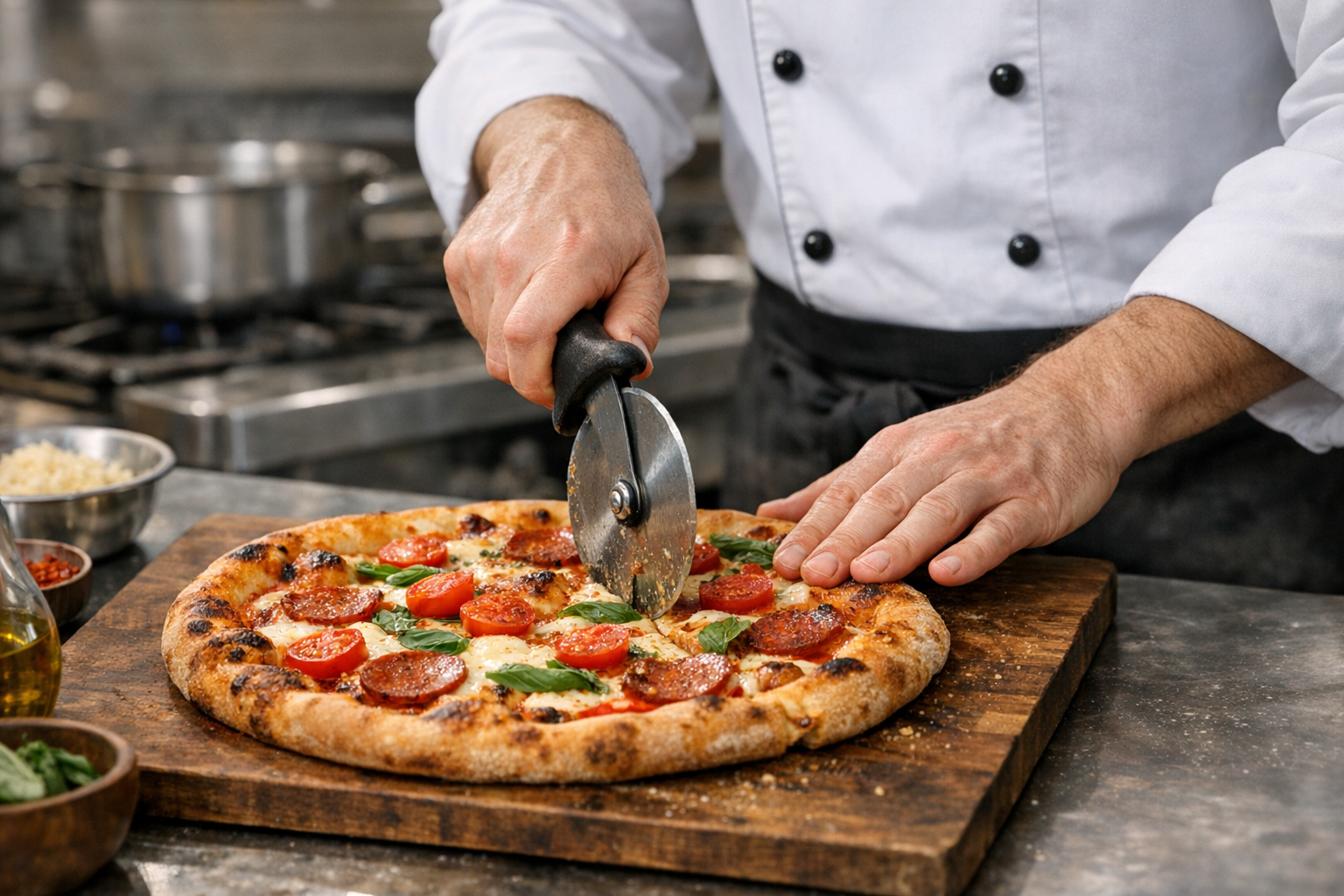
Quality verification occurs immediately after pizza removal from the oven and before packaging. This critical quality control step ensures that each order meets established standards before proceeding to delivery. Kitchen staff examine visual indicators including crust color, cheese coverage, and topping distribution to verify proper cooking.
Temperature verification may also be performed using food thermometers to ensure proper internal temperatures for food safety. Any pizzas that do not meet quality standards are either corrected through additional cooking or remade entirely. This quality gate prevents substandard products from reaching customers while also providing feedback for process improvement.
Packaging and Order Assembly
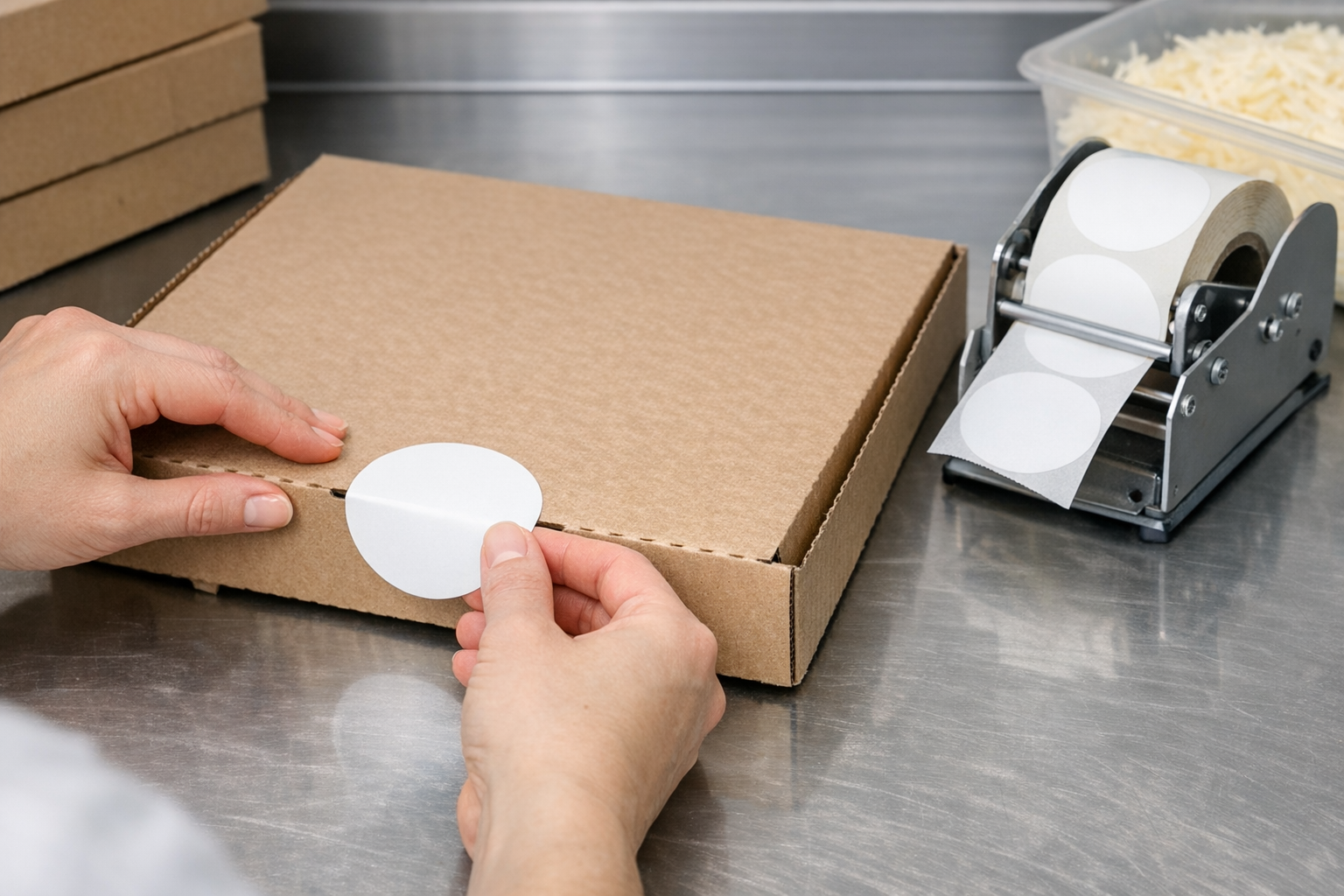
The packaging phase transforms individual pizzas into complete orders ready for delivery. Each pizza receives a box sized appropriately to prevent damage while allowing some air circulation to prevent condensation buildup. Boxes are labeled with order details including customer name, order number, and any special instructions for delivery personnel.
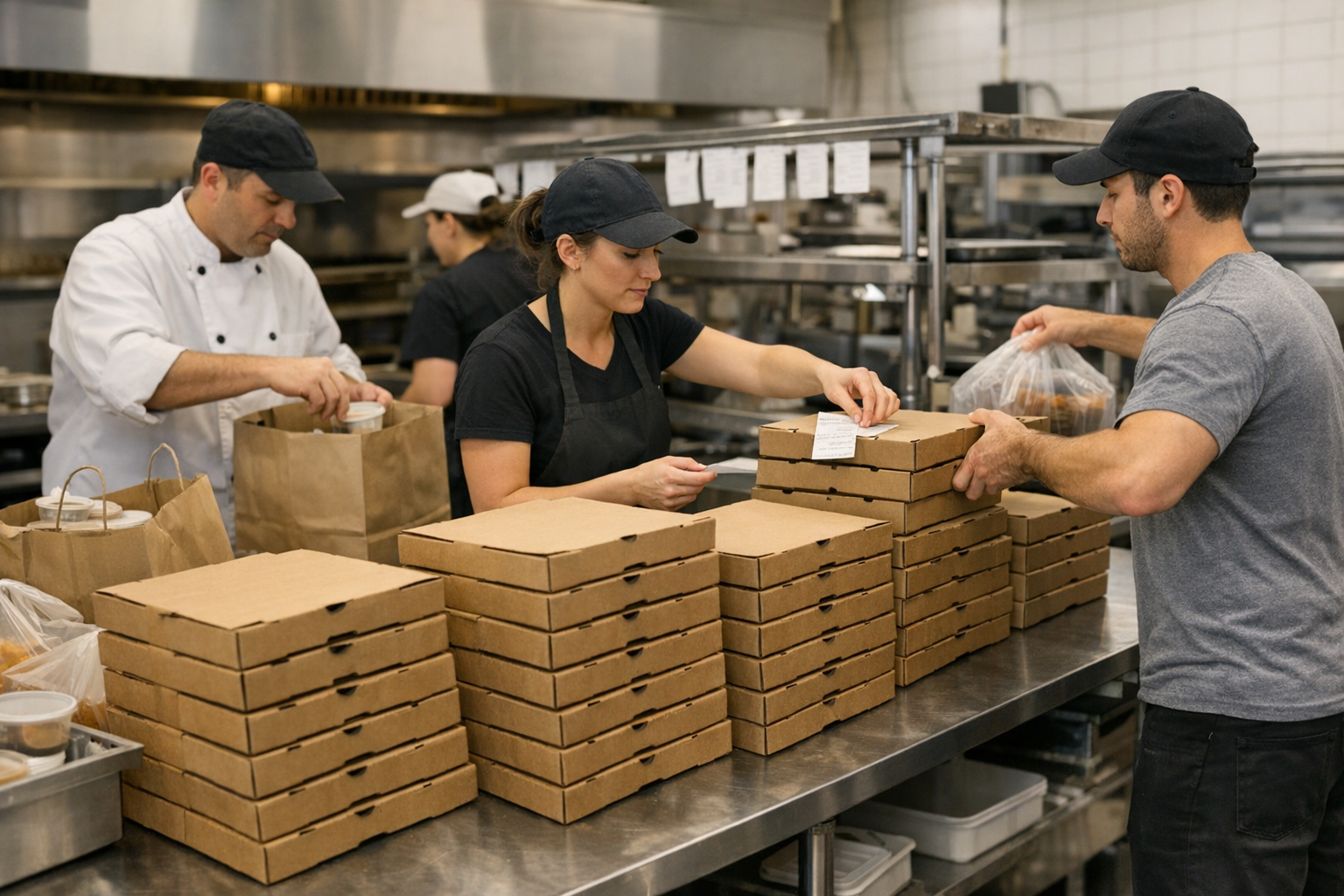
For multi-item orders, components are assembled together with appropriate packaging for side items, beverages, and accompanying products. The assembled order receives a final verification to ensure all items are included and properly packaged before being transferred to the staging area for driver pickup. This organized staging facilitates efficient handoff to delivery personnel.
Workflow Diagram
Preparation Process Flow
Order Receipt
Customer order enters system
Dough Selection
Appropriate dough retrieved
Shaping
Dough stretched to size
Sauce Application
Sauce distributed evenly
Topping Assembly
Ingredients placed per order
Baking
Cooked in oven at proper temp
Quality Check
Inspection for standards
Packaging
Boxed and labeled
Staging
Prepared for driver pickup
The order preparation workflow demonstrates the systematic approach required for efficient food service delivery operations. Each step in the process requires specific skills, equipment, and coordination to achieve the quality and timeliness expected in pizza delivery service. Understanding this workflow provides insight into how restaurants manage complex operations while maintaining consistency across high volumes of orders.